- Call on : 904-788-1185
- Operational Hours : 8:00 am - 5:00 pm

The tree may be gone, but the problem may not be. A leftover stump can sit in the middle of a lawn, interfere with a mower, take up planting space, or become an obstacle around a driveway or walkway.
Quill’s Tree Services, LLC provides professional stump grinding for residential and commercial properties in Jacksonville and surrounding Northeast Florida communities. The service reduces the remaining stump below the surrounding ground level so the area can be easier to maintain and use.
The right approach depends on the stump’s size, location, access, surrounding landscape, and what you plan to do with the space afterward.
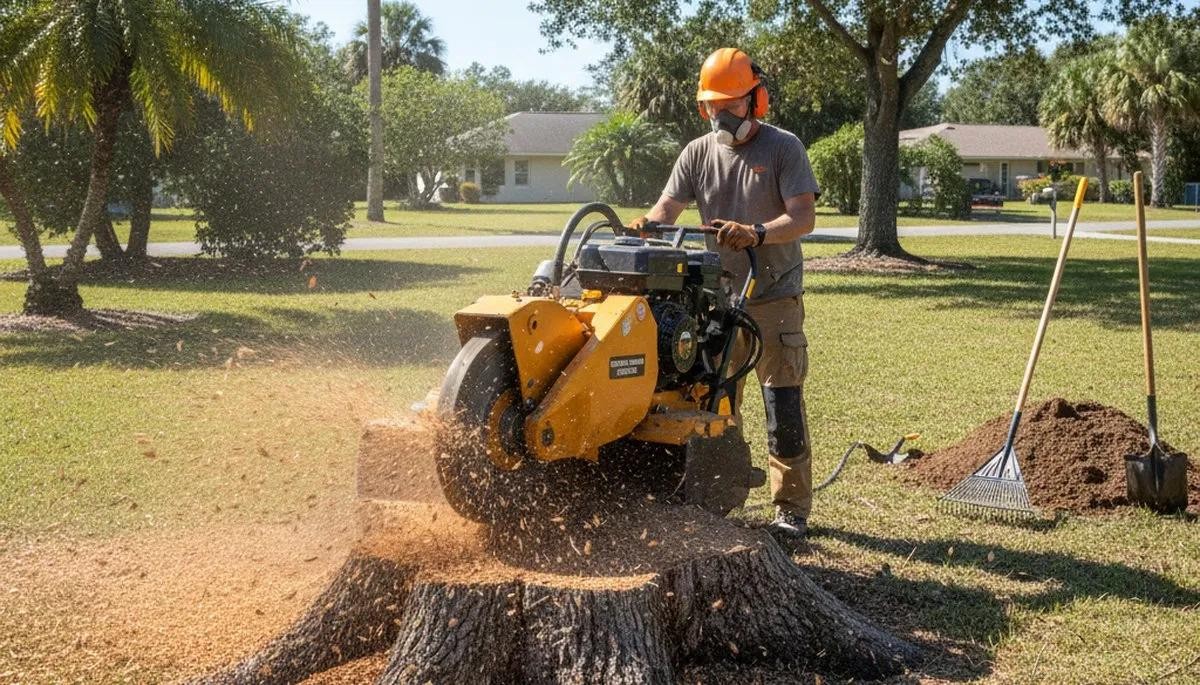
A stump does not always cause trouble immediately. The inconvenience often appears later, when you try to mow around it, redesign the yard, or use the space for something else.
A leftover stump can:
Consider a tree that once stood beside a driveway. After removal, the driveway becomes easier to access, but the stump still occupies the edge of the property. You cannot mow normally around it, plant where you want, or fully use the space.
Stump grinding uses specialized equipment to break the remaining wood into smaller pieces below the surrounding ground level.
That is different from simply cutting the stump as close to the ground as possible. A low-cut stump can still remain visible and interfere with future use of the area.
Grinding can reduce the stump far enough below the surface for the area to be incorporated into a future landscaping plan. The appropriate depth can vary depending on the stump and what you intend to do with the site.
For example, preparing an area for grass may have different requirements from preparing it for a garden bed, walkway, or another outdoor project.
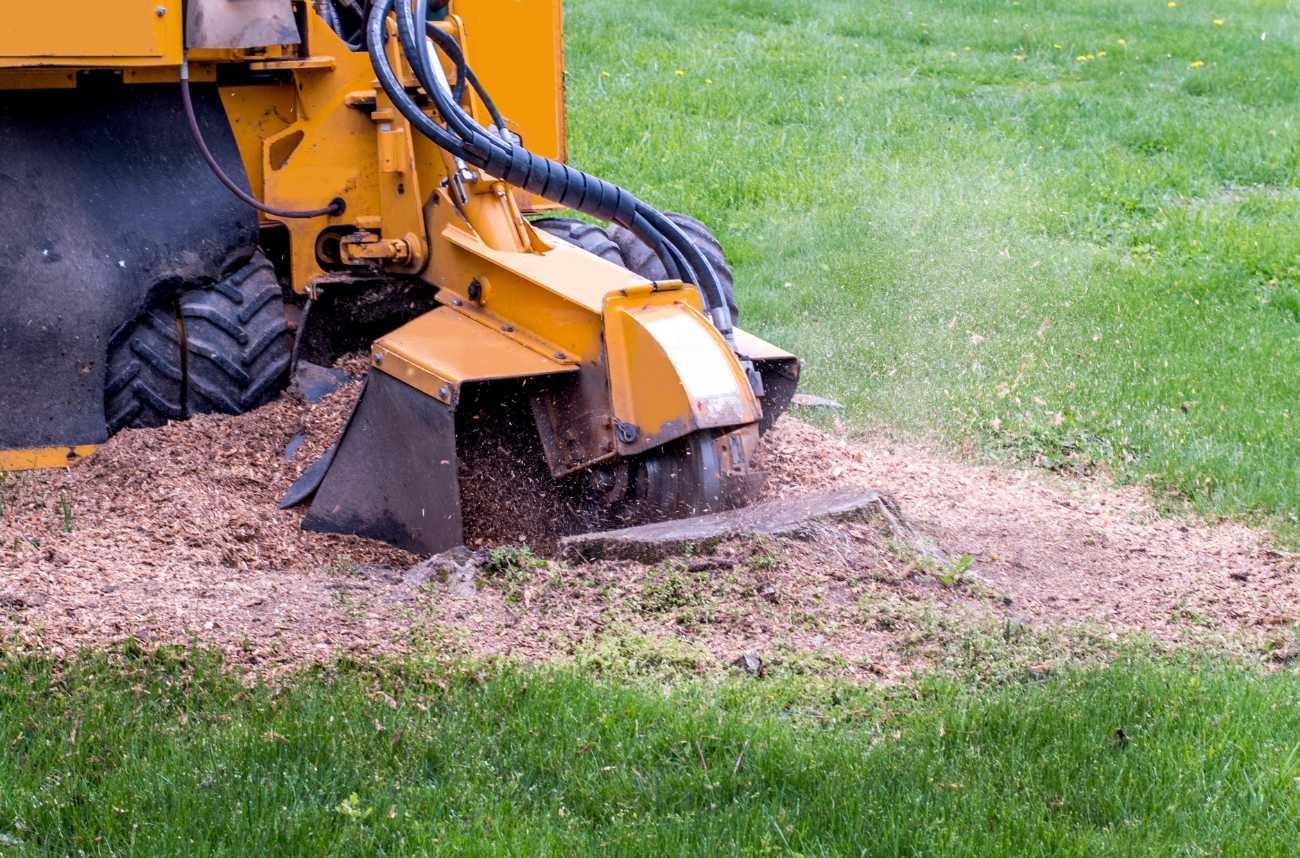
The equipment is only one part of the job. The surrounding property also matters. A typical service involves:
Its diameter, height, condition, location, and surrounding ground are considered before work begins.
Fences, buildings, gates, landscaping, driveways, and other obstacles can affect how equipment reaches the stump.
The intended use of the area can help determine how extensively the stump should be reduced.
The stump is mechanically broken down below the surrounding surface.
Grinding creates wood chips and smaller debris that need to be handled appropriately.
The goal is to leave the affected section of the property in a more usable condition.
This approach matters because a stump in an open backyard is a very different job from one squeezed between a fence and established landscaping.
Grinding produces wood chips rather than the large logs and branches associated with tree removal.
That makes stump grinding debris removal an important part of planning the project. The amount of material can vary significantly depending on the stump’s diameter and how deeply it needs to be ground.
Before work begins, consider what you want the area to become.
If you are restoring lawn, you may want the area cleared and prepared for the next stage. If you are creating a planting bed, some of the resulting material may need to be managed differently.
The important point is to avoid treating cleanup as an afterthought. The stump may be gone, but the job is not truly useful if the resulting material leaves the area difficult to work with.
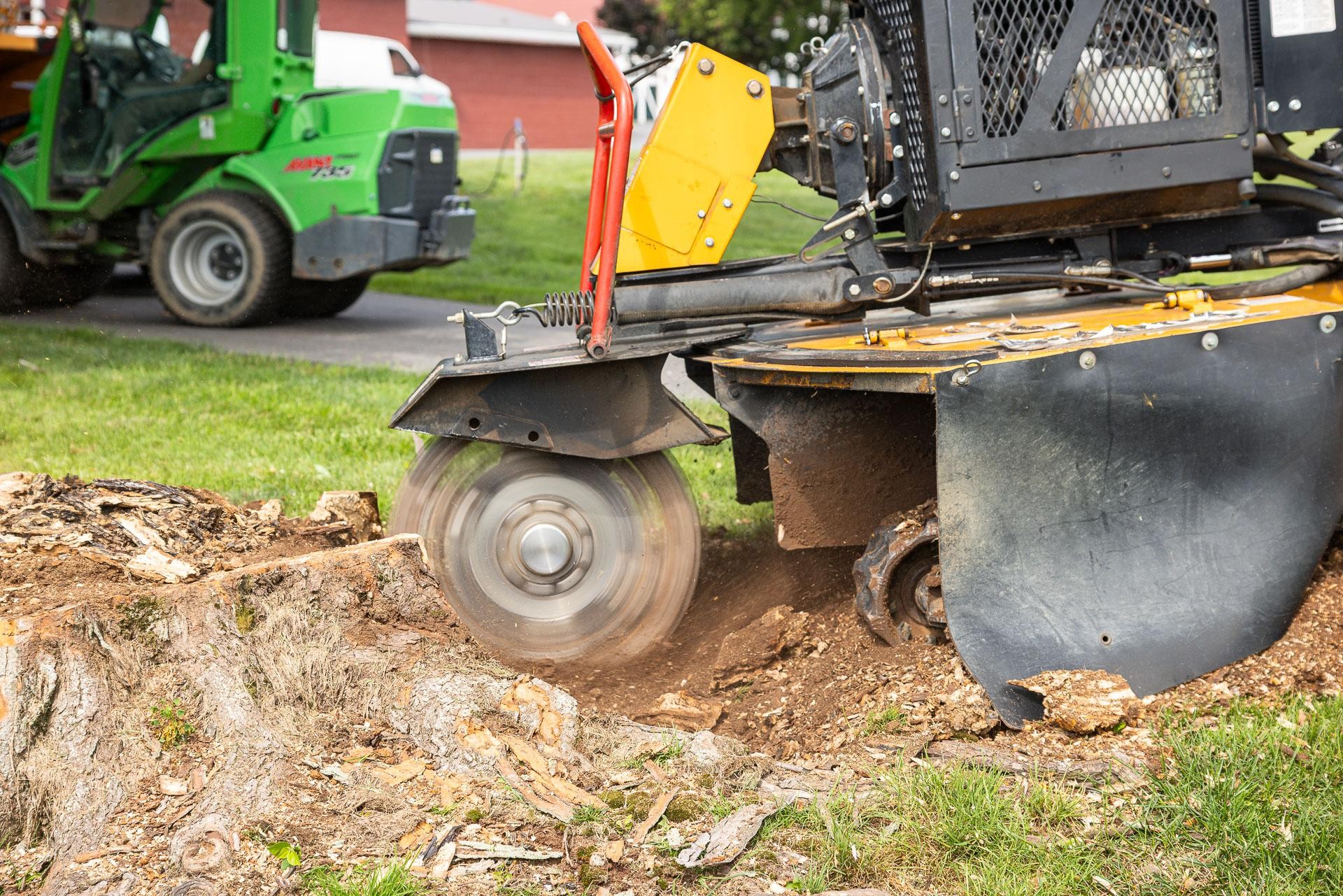
You do not necessarily need to grind every stump immediately. The decision usually comes down to how the stump affects the property and what you want to do with the space.
Grinding can make sense when:
Timing can also matter. If you already know that a garden, lawn renovation, fence, or other improvement is coming, dealing with the stump first can prevent it from becoming an obstacle during the next project.
Stump grinding and stump removal are not the same process.
Stump grinding reduces the remaining stump and accessible wood below ground level. It is often suitable when the goal is to clear the visible obstruction and make the surface easier to use.
Stump removal involves excavating the stump and potentially a larger portion of its root system. That can disturb more surrounding soil and may be unnecessary when the main concern is the stump itself.
Think about what happens next.
If you simply want to restore part of your lawn, grinding may meet the need. If a construction or landscaping project requires deeper excavation in that exact location, the site may have different requirements.
The same stump can create very different problems depending on its location.
In Jacksonville, a stump near a driveway may interfere with parking, mowing, or access. In a backyard, the bigger issue may be reclaiming space for grass, a patio, or landscaping.
Homeowners researching best stump grinding in Jacksonville should look beyond whether a company simply removes the visible stump. Ask whether the provider considers equipment access, surrounding property, grinding depth, debris, and the intended use of the area.
For homeowners needing stump grinding in Orange Park, access can become particularly important when a stump sits near fences, established landscaping, or other features that restrict equipment movement.
Properties needing stump grinding services Saint Johns FL may also have established residential landscapes where protecting surrounding plants, structures, and usable yard space matters.
In St. Augustine, stump grinding services St Augustine can help address older stumps left behind after previous tree work, especially when they interfere with lawn maintenance or planned improvements.
There is no responsible flat rate for every stump. The amount and difficulty of work can vary considerably between properties.
Cost may be influenced by:
A large stump in an open yard may be relatively straightforward to access. A smaller stump behind a narrow gate or beside delicate landscaping can present a different challenge.
A property-specific assessment gives a more useful basis for discussing the work than a generic price based only on stump size.
Quill’s Tree Services, LLC is a family-owned and veteran-owned tree-care company serving residential and commercial properties throughout Northeast Florida.
The company emphasizes safety, quality workmanship, professional equipment, and personalized service. Stump grinding also connects naturally with its other tree-care work, including pruning, tree removal, and debris cleanup.
That matters when a stump is only one part of a larger project. A homeowner may need a storm-damaged tree removed before addressing the stump. Another may have inherited an old stump from a previous tree removal and now want to reclaim the area.
The company’s name itself has a personal story. Quill was the owner’s beloved cat, and that connection gives the business an identity that is more personal than a generic tree-service name.
A stump does not have to dictate what happens with the rest of your yard.
Look at where it sits, what surrounds it, how you access the area, and what you want to use the space for next. Those details can help determine whether grinding is the appropriate solution and what level of cleanup the project may require.
Contact Quill’s Tree Services, LLC to discuss stump grinding in Jacksonville and surrounding Northeast Florida communities. Whether an old stump is blocking your mower, taking up planting space, or getting in the way of a planned yard improvement, the next step is to assess the stump and the space around it.
Stump grinding removes the visible stump and accessible wood below ground, but the deeper root system remains underground.
Grinding depth depends on the stump, location, ground conditions, and what you plan to do with the area afterward.
Grinding creates wood chips and debris. Cleanup and debris handling can depend on how you plan to use the area.
Grinding usually disturbs less soil, while removal excavates the stump and more roots. The right option depends on your plans.
Stump size, number, access, grinding depth, nearby structures, surrounding landscaping, debris volume, and cleanup needs can affect the overall cost.